
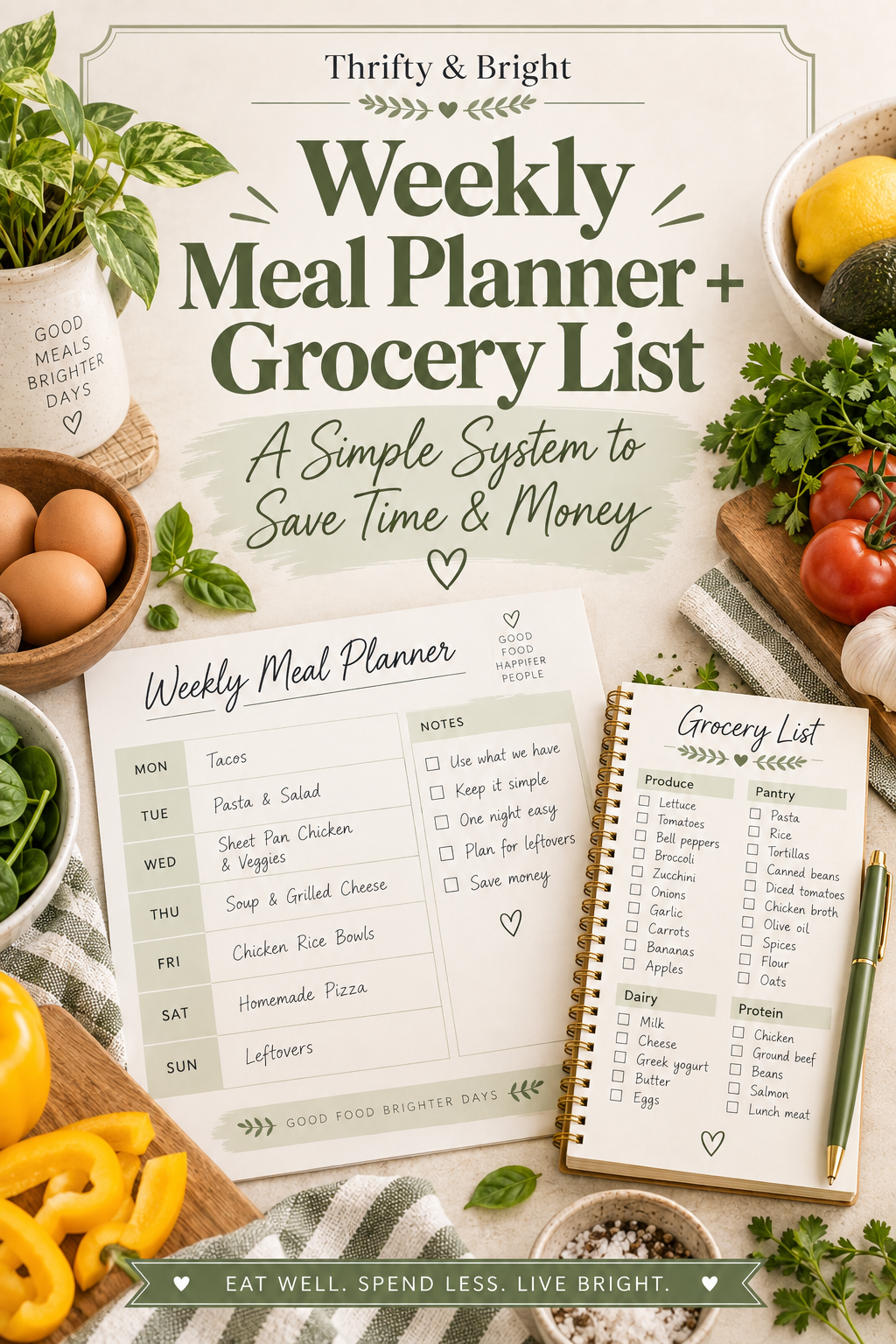
Meal planning does not need to be complicated.
A simple weekly plan can help you spend less on groceries, reduce food waste, avoid last-minute takeout, and make busy evenings much easier.
The goal is not to plan every bite perfectly.
It is to decide enough in advance that you know what to cook, what to buy, and what you already have at home.
This weekly meal planner and grocery list system gives you a simple routine you can repeat every week.
Why Use a Weekly Meal Planner?
Without a plan, grocery shopping can easily become a collection of unrelated ingredients.
You may come home with plenty of food but still feel like there is “nothing to cook.”
A weekly meal plan can help you:
- reduce impulse purchases
- use ingredients you already own
- avoid buying duplicates
- reduce food waste
- spend less on takeout
- make grocery shopping faster
- create easier weeknight routines
Even planning only dinners can make a noticeable difference.
Step 1: Shop Your Kitchen First
Before writing your meal plan, check your:
- refrigerator
- freezer
- pantry
Look for ingredients that should be used soon.
Write down:
- produce that is getting ripe
- leftovers
- frozen meat or meals
- open packages
- pantry staples
- ingredients close to expiring
Try to build at least two or three meals around what you already have.
Step 2: Check Your Week
Your meal plan should match your schedule.
Look at the next seven days.
Ask yourself:
- Which evenings will be busy?
- Which nights will everyone be home?
- Are there appointments or activities?
- Which days will you have more time to cook?
Put the easiest meals on your busiest nights.
For example:
Busy night
Quesadillas + fruit
Normal weeknight
Chicken and rice bowls
Weekend
Homemade pizza
Planning for your real schedule makes the meal plan much easier to follow.
Step 3: Choose Your Dinners
Start with dinner because it is often the meal most likely to lead to takeout.
A simple structure might be:
- 4 planned dinners
- 1 leftovers night
- 1 pantry/freezer night
- 1 flexible night
You do not need seven completely different recipes every week.
Example Weekly Meal Plan
| Day | Dinner |
|---|---|
| Monday | Chicken and rice bowls |
| Tuesday | Bean and cheese burritos |
| Wednesday | Pasta with vegetables |
| Thursday | Leftovers |
| Friday | Homemade pizza |
| Saturday | Baked potatoes with toppings |
| Sunday | Pantry soup and bread |
This works well because many ingredients overlap.
Step 4: Plan Simple Breakfasts
You do not need seven different breakfasts.
Choose two or three options and rotate them.
Budget-friendly ideas include:
- oatmeal
- eggs and toast
- yogurt and fruit
- peanut butter toast
- overnight oats
- homemade pancakes
A repetitive breakfast routine can make mornings easier and grocery shopping simpler.
Step 5: Plan Lunches Around Leftovers
One of the easiest ways to save money is to turn dinner into tomorrow’s lunch.
Examples:
Dinner
Chicken and rice
Lunch
Chicken rice bowl
Or:
Dinner
Bean chili
Lunch
Chili with baked potato
This reduces both cooking time and food waste.
Step 6: Create Your Grocery List
Once the meals are planned, write down only the ingredients you are missing.
Organize your list by section.
Produce
- fruit
- vegetables
- herbs
Protein
- eggs
- chicken
- beans
- meat
- tofu
Dairy
- milk
- yogurt
- cheese
Pantry
- rice
- pasta
- canned tomatoes
- bread
- tortillas
- oats
Frozen
- vegetables
- fruit
- backup meals
Household
- only what you genuinely need
Organizing your list this way can help you shop faster and reduce forgotten items.
Step 7: Use Overlapping Ingredients
One of the best ways to make meal planning cheaper is to use the same ingredient in several meals.
For example:
Tortillas
Use for:
- burritos
- quesadillas
- breakfast wraps
Rice
Use for:
- chicken bowls
- fried rice
- burrito bowls
Chicken
Use for:
- chicken and rice
- tacos
- soup
Vegetables
Use for:
- pasta
- soup
- stir-fry
- side dishes
The more flexible an ingredient is, the easier it is to use before it spoils.
Step 8: Add One “Use-It-Up” Meal
Choose one meal each week specifically for leftovers and ingredients that need to be used.
This might be:
- fried rice
- soup
- pasta
- omelet
- wraps
- loaded potatoes
- grain bowls
This is one of the simplest ways to reduce food waste.
Step 9: Keep Emergency Meals Available
No meal plan works perfectly every week.
Keep two quick meals at home for nights when plans change.
Examples:
- pasta and sauce
- soup and grilled cheese
- frozen vegetables and rice
- eggs and toast
- bean quesadillas
The goal is to make your backup option easier than ordering takeout.
Step 10: Keep a Running Grocery List
During the week, add items to your grocery list as they run low.
This prevents you from trying to remember everything on shopping day.
You can use:
- a paper list
- a note on your phone
- a shared family list
- a printable grocery planner
Use whatever system you will actually maintain.
A Simple Meal-Planning Routine
Try doing this once each week:
1. Check your kitchen
See what you already have.
2. Check your schedule
Plan easy meals for busy days.
3. Choose your dinners
Start with five or six.
4. Plan leftovers
Decide what can become lunch.
5. Write your grocery list
Buy only the missing ingredients.
6. Prep a few basics
Wash produce, cook rice, or prepare ingredients if helpful.
This entire process can become much faster once it becomes a habit.
Weekly Meal Planner Example
Here is a simple structure you can copy:
| Day | Breakfast | Lunch | Dinner |
|---|---|---|---|
| Monday | Oatmeal | Leftovers | Chicken rice bowls |
| Tuesday | Eggs & toast | Sandwiches | Bean burritos |
| Wednesday | Yogurt & fruit | Leftovers | Pasta & vegetables |
| Thursday | Oatmeal | Soup | Leftovers |
| Friday | Eggs & toast | Sandwiches | Homemade pizza |
| Saturday | Pancakes | Leftovers | Baked potatoes |
| Sunday | Oatmeal | Simple lunch | Pantry soup |
Do not worry about making the plan impressive.
A useful plan is better than a perfect one.
How Meal Planning Can Help Lower Your Grocery Bill
Meal planning works because it reduces several common spending problems:
- impulse purchases
- duplicate ingredients
- wasted food
- extra grocery trips
- last-minute takeout
- buying ingredients without a purpose
If grocery spending is one of your biggest budget challenges, read 20 Ways to Cut Your Grocery Bill.
For affordable staples to build meals around, see The Ultimate Cheap Grocery List.
And if you need more dinner inspiration, read 50 Cheap Family Dinner Ideas.
Free Weekly Meal Planner + Grocery List
A printable planner can make this routine much easier.
Use it to:
- plan breakfasts, lunches, and dinners
- write your grocery list
- note ingredients you already have
- track your weekly food plan
- reduce forgotten purchases
We will add the free Weekly Meal Planner + Grocery List printable here so you can keep everything on one page.
Final Thoughts
Meal planning does not need to take hours.
A simple weekly routine can give you more control over your groceries and make everyday meals easier.
Start small.
Plan a few dinners, use what you already own, create a grocery list, and repeat the process next week.
Consistency matters much more than creating the perfect meal plan.
This article is for general informational purposes. Food prices, dietary needs, and household schedules vary.