
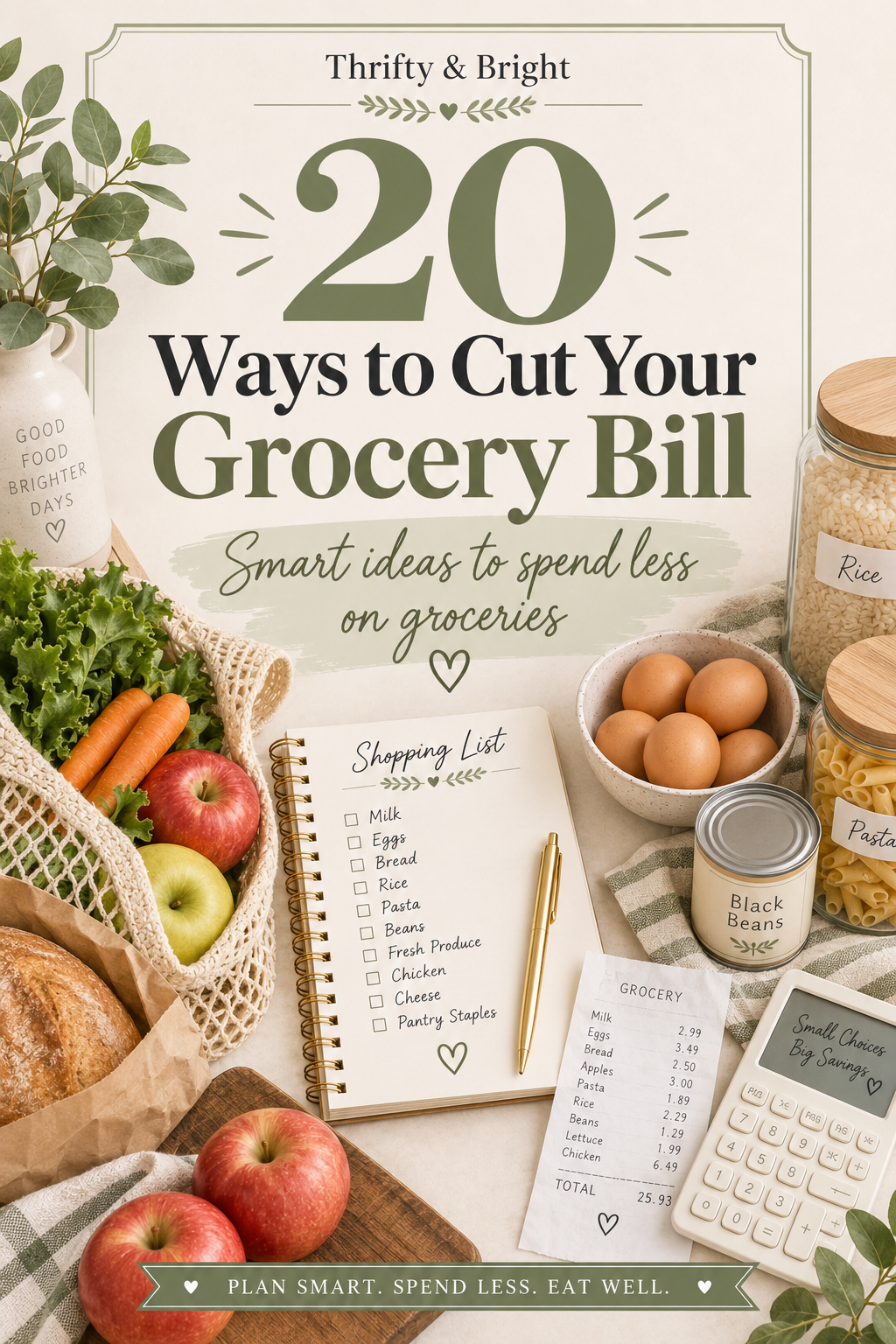
Grocery prices can take up a large part of a household budget, but cutting your food spending does not have to mean eating boring meals or buying the cheapest possible ingredients.
The biggest savings often come from better planning, reducing waste, choosing versatile foods, and avoiding the small habits that quietly increase your total at checkout.
Here are 20 practical ways to lower your grocery bill while still keeping meals simple and enjoyable.
1. Plan Your Meals Before You Shop
A grocery list works much better when it is based on actual meals.
Before shopping, decide what you will make for:
- breakfasts
- lunches
- dinners
- snacks
You do not need a complicated meal plan.
Even choosing five or six dinners before shopping can reduce impulse purchases and last-minute takeout.
2. Shop Your Pantry First
Before making your grocery list, check your:
- pantry
- refrigerator
- freezer
Build meals around food you already have.
This is one of the easiest ways to avoid buying duplicates and reduce food waste.
3. Make a Grocery List and Stick to It
A grocery list gives every item a purpose.
Without one, it is easy to add snacks, drinks, convenience foods, and sale items that were never part of your plan.
Try organizing your list by section:
- produce
- dairy
- meat
- pantry
- frozen foods
This can also help you move through the store faster.
4. Set a Grocery Budget Before You Enter the Store
Do not wait until checkout to find out how much you spent.
Choose a realistic weekly or monthly grocery target in advance.
Then use that number to guide your choices.
5. Compare Unit Prices
A larger package is not always the better deal.
Compare the price per:
- ounce
- pound
- gram
- liter
- item
This is especially useful for:
- cereal
- rice
- pasta
- canned foods
- cleaning products
- paper goods
6. Choose Store Brands
Store-brand staples can often cost less than national brands.
Compare prices for:
- flour
- sugar
- rice
- pasta
- canned vegetables
- oats
- spices
- cleaning supplies
You do not have to replace every brand you like.
Start with basic products where the difference matters least to you.
7. Buy Fewer Convenience Foods
Convenience usually costs extra.
Examples include:
- pre-cut fruit
- chopped vegetables
- single-serving snack packs
- prepared lunches
- pre-seasoned foods
- bottled drinks
Choose convenience where it genuinely saves you time, but do not pay for it automatically.
8. Cook One Extra Meal at Home Each Week
If takeout is part of your normal routine, replacing just one restaurant or delivery meal each week can make a noticeable difference.
Keep one or two very easy backup meals at home for busy days.
For example:
- pasta and sauce
- eggs and toast
- grilled cheese and soup
- rice and frozen vegetables
9. Use Leftovers on Purpose
Do not treat leftovers as an accident.
Plan for them.
You can:
- eat dinner leftovers for lunch
- freeze extra portions
- turn leftover chicken into wraps
- use leftover vegetables in soup
- turn cooked rice into fried rice
This helps stretch one cooking session into several meals.
10. Freeze Food Before It Spoils
Your freezer can protect your grocery budget.
Freeze foods such as:
- bread
- meat
- cooked meals
- fruit
- vegetables
- shredded cheese
- leftovers
If something is unlikely to be eaten soon, freeze it before it goes bad.
11. Create an “Eat First” Section
Choose one part of your refrigerator for foods that need to be used soon.
Put items there such as:
- opened containers
- ripe produce
- leftovers
- products close to their use-by date
This makes it easier to see what should be eaten before buying or preparing something else.
12. Plan Meals With Overlapping Ingredients
Buy ingredients that can be used across several meals.
For example, tortillas could be used for:
- breakfast wraps
- tacos
- quesadillas
- bean burritos
A bag of carrots could work in:
- soup
- stir-fry
- roasted vegetables
- snacks
The more ways you can use an ingredient, the less likely it is to be wasted.
13. Build Meals Around Affordable Staples
Some ingredients are inexpensive and highly flexible.
Good staples can include:
- rice
- oats
- potatoes
- pasta
- beans
- lentils
- eggs
- frozen vegetables
- canned tomatoes
These foods can become the foundation of many low-cost meals.
For more ideas, see The Ultimate Cheap Grocery List.
14. Eat Meat Less Often
Meat can be one of the more expensive items in a grocery cart.
You do not have to eliminate it completely.
Try replacing one or two meals each week with options such as:
- beans
- lentils
- eggs
- tofu
- chickpeas
Or use smaller amounts of meat in dishes with rice, vegetables, pasta, or beans.
15. Buy Produce Based on Price and Season
Instead of deciding that you must buy a specific fruit or vegetable every week, compare what is affordable.
Seasonal produce may be less expensive.
Frozen produce is also worth comparing because it lasts longer.
16. Check Weekly Specials Before Meal Planning
If your store publishes weekly offers, use them as inspiration rather than buying random sale items.
For example, if chicken, potatoes, and carrots are discounted, build one or two meals around those ingredients.
A sale only saves money if you actually use what you buy.
17. Be Careful With Bulk Buying
Buying in bulk can save money, but only when:
- the unit price is lower
- you will use the product
- you have storage space
- the food will not spoil
Buying a large package that gets wasted is not a bargain.
18. Reduce Snack and Drink Spending
Packaged snacks and drinks can quietly take up a significant part of a grocery budget.
Try swapping some of them for:
- popcorn
- bananas
- apples
- yogurt
- peanut butter toast
- homemade snacks
- water
- coffee or tea made at home
You do not need to eliminate treats. Just make them more intentional.
19. Keep a Running Grocery List
Instead of trying to remember everything on shopping day, keep a list throughout the week.
When something runs low, add it immediately.
This helps prevent forgotten items and unnecessary extra trips to the store.
20. Track Your Grocery Spending for One Month
You cannot improve what you do not measure.
For one month, track:
- how much you spend
- how often you shop
- how much food gets thrown away
- which purchases were unplanned
- how often you order takeout
At the end of the month, identify the two or three biggest opportunities to save.
A Simple Grocery-Saving Routine
You can turn these ideas into a weekly routine:
Step 1
Check your refrigerator, freezer, and pantry.
Step 2
Choose meals that use what you already have.
Step 3
Check store specials.
Step 4
Write your grocery list.
Step 5
Set your spending limit.
Step 6
Shop once if possible.
Step 7
Use leftovers and freeze extras during the week.
This simple routine can reduce both spending and food waste.
Example Monthly Savings
Your results will depend on your current habits, but small changes can add up.
| Change | Example Monthly Reduction |
|---|---|
| Reduce takeout | $50–$150 |
| Buy more store brands | $15–$40 |
| Reduce food waste | $20–$50 |
| Buy fewer convenience foods | $20–$60 |
| Use leftovers more often | $20–$50 |
| Reduce snacks and drinks | $20–$75 |
These are examples only. Actual savings vary by household and location.
What Not to Do
Trying to cut your grocery bill too aggressively can backfire.
Avoid:
- buying food your family will not eat just because it is cheap
- purchasing excessive bulk quantities
- skipping meals to save money
- buying low-cost food that will simply be wasted
- making your meal plan so complicated that you give up
A sustainable grocery budget should still work for your real life.
Start With Three Changes
You do not need to use all 20 ideas at once.
Start with three:
- Shop your pantry before buying groceries.
- Plan your meals.
- Track your spending.
Once those become habits, add another strategy.
If you want a simple list of affordable foods to build your meals around, read The Ultimate Cheap Grocery List.
And for additional ways to lower household spending, read 50 Simple Ways to Save $500 a Month.
Small changes in how you plan, shop, cook, and use leftovers can make your grocery budget much easier to manage.
This article is for general informational purposes. Grocery prices, dietary needs, and household expenses vary by location and individual circumstances.