
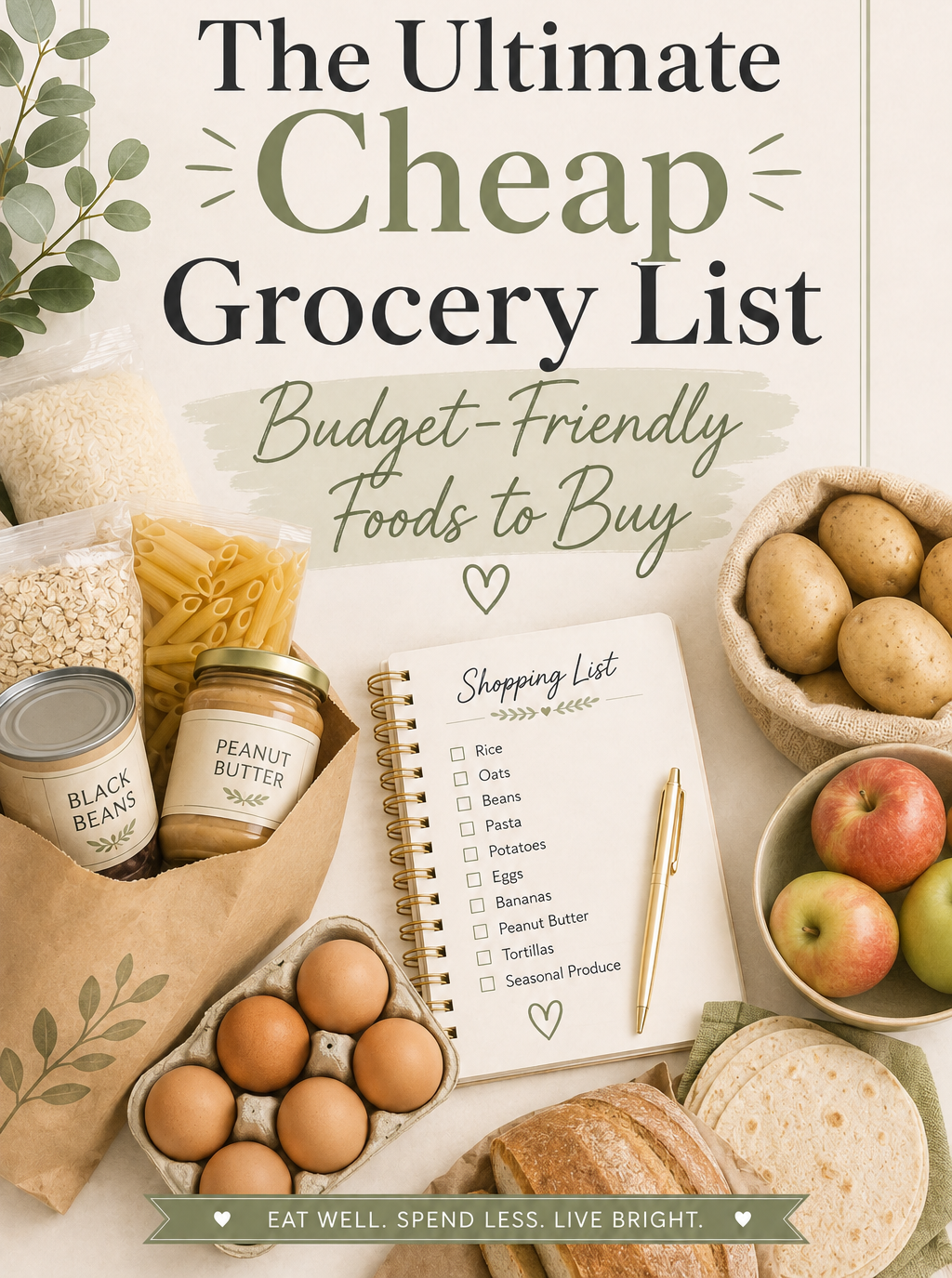
Groceries are one of the easiest household expenses to lose control of.
A few impulse buys, convenience foods, snacks, and last-minute extras can turn a reasonable grocery trip into a much larger bill.
The good news is that you do not need a complicated system to spend less.
A simple grocery list built around affordable, flexible ingredients can make meal planning easier and help stretch your food budget further.
This cheap grocery list is designed to help you build simple breakfasts, lunches, dinners, and snacks without filling your cart with expensive specialty items.
How to Build a Cheap Grocery List
A budget-friendly grocery list usually works best when it includes:
- affordable proteins
- inexpensive carbohydrates
- versatile vegetables
- low-cost fruits
- pantry staples
- basic cooking ingredients
- foods that can be used in more than one meal
The goal is to buy ingredients that work together.
For example, rice can be used for:
- rice bowls
- stir-fries
- soups
- burrito bowls
- side dishes
- leftovers
That makes it much more useful than buying an ingredient you only use once.
Cheap Grocery List
Affordable Proteins
Protein can be one of the more expensive parts of a grocery budget, so choosing flexible options matters.
Consider:
- eggs
- canned tuna
- canned chicken
- lentils
- dried beans
- canned beans
- peanut butter
- chicken thighs
- whole chicken
- ground turkey
- ground beef when on sale
- Greek yogurt
- cottage cheese
- tofu
- canned sardines
- frozen fish when discounted
Money-Saving Tip
Compare the price per pound rather than only the package price.
A larger package is not automatically cheaper.
Budget-Friendly Carbohydrates
Affordable carbohydrates can form the base of many inexpensive meals.
Add:
- rice
- pasta
- oats
- potatoes
- sweet potatoes
- bread
- tortillas
- flour
- cornmeal
- couscous
- noodles
Rice, pasta, potatoes, and oats are particularly useful because they can be combined with many different proteins and vegetables.
Cheap Vegetables
Fresh produce does not have to be expensive.
Good budget options often include:
- carrots
- onions
- cabbage
- potatoes
- celery
- bell peppers when on sale
- zucchini
- broccoli
- frozen mixed vegetables
- frozen peas
- frozen spinach
- canned tomatoes
- canned corn
- canned green beans
Frozen vegetables can be especially useful because they last longer and can reduce food waste.
Affordable Fruits
Choose fruits based on price and season.
Common budget-friendly options include:
- bananas
- apples
- oranges
- seasonal fruit
- frozen berries
- raisins
Instead of buying many different fruits each week, choose two or three affordable options your household will actually eat.
Dairy and Refrigerated Basics
Depending on your household, consider:
- milk
- cheese
- plain yogurt
- butter
- eggs
- cottage cheese
Buy larger packages only if you know you will use them before they expire.
Pantry Staples
A well-stocked pantry makes cheap meals much easier.
Keep basics such as:
- canned tomatoes
- beans
- lentils
- rice
- pasta
- oats
- flour
- sugar
- baking powder
- cooking oil
- vinegar
- broth or bouillon
- peanut butter
- canned tuna
- tomato paste
Herbs, Spices, and Flavor Basics
Simple foods become much more enjoyable when you have a few basic seasonings.
Start with:
- salt
- black pepper
- garlic powder
- onion powder
- paprika
- Italian seasoning
- chili powder
- cinnamon
- soy sauce
- hot sauce
- mustard
You do not need a huge spice collection.
A few versatile seasonings can transform inexpensive ingredients into completely different meals.
Cheap Breakfast Foods
Budget-friendly breakfast staples include:
- oatmeal
- eggs
- toast
- bananas
- yogurt
- peanut butter
- homemade pancakes
- overnight oats
Easy Breakfast Idea
Oatmeal + banana + peanut butter
It is simple, filling, and uses ingredients that work in many other meals.
Cheap Lunch Foods
Consider:
- sandwiches
- leftovers
- rice bowls
- soups
- baked potatoes
- wraps
- tuna salad
- egg salad
- bean burritos
Packing lunch at home can also reduce spending on takeout.
Cheap Dinner Ingredients
Build dinners around a simple formula:
Protein + carbohydrate + vegetable + sauce or seasoning
For example:
- chicken + rice + frozen vegetables
- beans + tortillas + cheese
- pasta + canned tomatoes + vegetables
- eggs + potatoes + onions
- lentils + rice + carrots
- ground meat + potatoes + cabbage
This approach makes meal planning much easier.
25 Cheap Meal Ideas From This Grocery List
Here are some inexpensive meals you can make using the foods above:
- Spaghetti with tomato sauce
- Bean and cheese burritos
- Chicken and rice bowls
- Lentil soup
- Vegetable fried rice
- Baked potatoes with toppings
- Tuna sandwiches
- Egg and potato hash
- Pasta with vegetables
- Chicken soup
- Bean chili
- Peanut butter banana oatmeal
- Grilled cheese and soup
- Rice and beans
- Vegetable omelet
- Chicken tacos
- Lentil curry with rice
- Homemade pancakes
- Tuna pasta
- Loaded baked potatoes
- Bean quesadillas
- Ground turkey rice bowls
- Vegetable pasta soup
- Egg salad sandwiches
- Pantry vegetable stir-fry
Grocery Items That Can Increase Your Bill Quickly
You do not necessarily have to eliminate these foods, but they can make a grocery bill rise quickly:
- individually packaged snacks
- bottled drinks
- pre-cut produce
- prepared meals
- deli foods
- specialty sauces
- premium branded products
- single-serving products
- impulse checkout items
Convenience costs money.
Choose convenience strategically rather than automatically.
How to Make Your Cheap Grocery List Work Harder
Shop Your Kitchen First
Before making your grocery list, check:
- refrigerator
- freezer
- pantry
Build meals around what you already own.
Plan Meals With Overlapping Ingredients
If you buy tortillas, use them for more than one meal.
For example:
- breakfast wraps
- chicken tacos
- bean burritos
- quesadillas
This helps reduce waste.
Choose Store Brands
Compare store-brand basics with the brands you normally purchase.
Staples are often an easy place to reduce costs.
Use Frozen Foods
Frozen vegetables, fruit, and proteins can help prevent food from spoiling before you use it.
Keep Emergency Meals at Home
Keep two or three easy meals available for days when you do not feel like cooking.
For example:
- pasta and sauce
- frozen vegetables and rice
- eggs and toast
- soup and grilled cheese
This can help prevent expensive last-minute takeout.
Example Cheap Grocery List for One Week
Here is a simple example:
Protein
- eggs
- chicken thighs
- canned beans
- peanut butter
Carbohydrates
- oats
- rice
- pasta
- potatoes
- bread
- tortillas
Vegetables
- carrots
- onions
- cabbage
- frozen mixed vegetables
- canned tomatoes
Fruit
- bananas
- apples
Dairy
- milk
- cheese
- yogurt
Pantry
- tomato sauce
- broth
- cooking oil
- basic spices
From these ingredients, you could create multiple breakfasts, lunches, dinners, and snacks without buying dozens of unrelated products.
How to Spend Less on Groceries
A cheap grocery list works best when it is combined with good shopping habits.
Try:
- meal planning before shopping
- shopping with a list
- comparing unit prices
- checking weekly specials
- using food before it expires
- freezing leftovers
- buying fewer convenience foods
- planning meals around affordable ingredients
If you want even more ways to reduce your food spending, read 50 Simple Ways to Save $500 a Month.
You may also want to try the 30-Day No-Spend Challenge to identify other spending habits that are affecting your monthly budget.
Final Thoughts
Cheap grocery shopping is not about buying the lowest-priced food possible.
It is about choosing ingredients that are affordable, nutritious, flexible, and likely to be used.
A small collection of reliable staples can make grocery shopping simpler, reduce waste, and make meal planning much easier.
Start with the foods your household already enjoys and build your budget grocery list from there.
This article is for general informational purposes. Grocery prices vary by location, retailer, season, and household needs.