
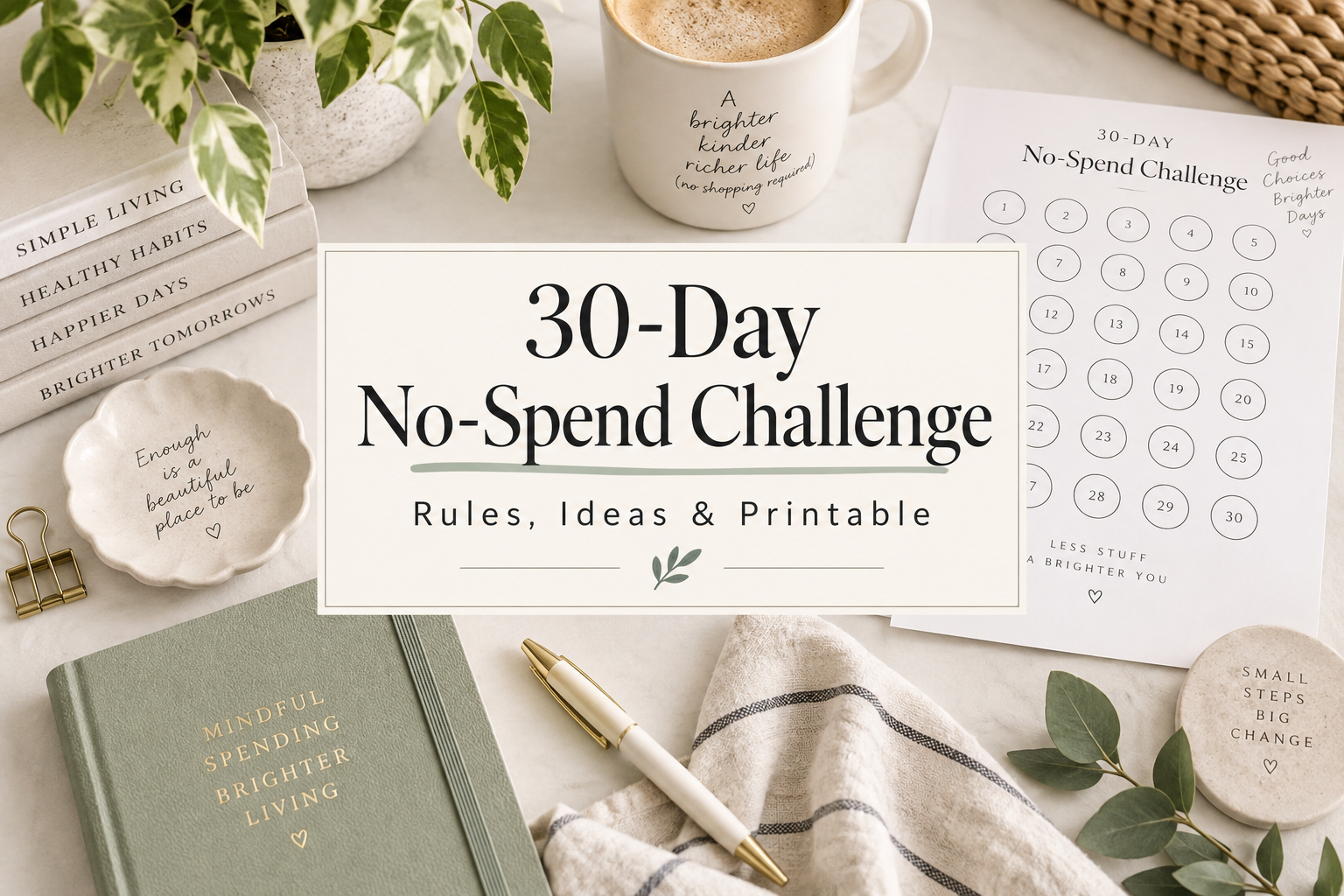
A 30-day no-spend challenge can be a simple way to reset your spending habits, save extra money, and become more intentional about what you buy.
The goal is not to spend absolutely nothing for an entire month.
You will still pay for essentials such as housing, utilities, groceries, transportation, medicine, and necessary bills.
Instead, the challenge focuses on cutting unnecessary and discretionary spending for 30 days.
What Is a No-Spend Challenge?
A no-spend challenge is a period of time when you avoid nonessential purchases.
For 30 days, you continue paying for necessities while temporarily pausing spending on things like:
- takeout
- coffee shop drinks
- clothing
- home décor
- beauty extras
- entertainment purchases
- impulse shopping
- unnecessary subscriptions
- convenience purchases
The purpose is to create a clear boundary around optional spending.
Why Try a 30-Day No-Spend Challenge?
A no-spend month can help you:
- identify spending habits you did not notice before
- save extra money
- reduce impulse purchases
- use food and products you already own
- rethink subscriptions and recurring expenses
- become more intentional with future purchases
It can also help you see how much of your monthly spending is truly necessary.
Step 1: Decide What Counts as Essential
Before the challenge starts, write down what you are allowed to spend money on.
Your essential list might include:
- rent or mortgage
- utilities
- groceries
- fuel or transportation
- insurance
- medicine
- childcare
- necessary household supplies
- existing bills and debt payments
Your list will depend on your household and circumstances.
The important part is deciding before the challenge begins.
Step 2: Create Your No-Spend Rules
Next, define what you will not buy for the next 30 days.
For example:
No:
- takeout
- restaurant meals
- coffee shop drinks
- clothing
- beauty products unless something essential runs out
- home décor
- books you can borrow
- entertainment purchases
- random online shopping
- impulse purchases
Allowed:
- regular groceries
- medicine
- transportation
- necessary bills
- emergency purchases
- essential replacements
Clear rules make the challenge much easier to follow.
Step 3: Choose Your Savings Goal
Give the challenge a purpose.
Instead of simply saying, “I want to spend less,” choose a specific goal.
For example:
- save $300
- build an emergency fund
- pay extra toward debt
- save for a vacation
- create a holiday fund
- build a home repair fund
Write the goal somewhere visible.
Step 4: Prepare Before Day One
A little preparation can prevent unnecessary spending later.
Before starting:
- plan several easy meals
- check your pantry and freezer
- make coffee supplies available at home
- gather free entertainment ideas
- unsubscribe from retail emails
- remove shopping apps from your phone
- review upcoming events
- identify situations that usually trigger spending
The easier you make the challenge, the more likely you are to complete it.
30-Day No-Spend Challenge
Here is a simple daily plan you can follow.
Day 1: Write Your Rules
Decide exactly what you can and cannot buy during the challenge.
Day 2: Check Your Subscriptions
Review recurring charges and cancel anything you no longer use.
Day 3: Inventory Your Pantry
Write down meals you can make from food already at home.
Day 4: Unsubscribe From Retail Emails
Reduce temptation by removing promotional emails from your inbox.
Day 5: Have a No-Spend Evening
Cook at home and choose free entertainment.
Day 6: Review Last Month’s Spending
Look for categories where money disappeared faster than expected.
Day 7: Calculate Your First Week’s Savings
Estimate how much you avoided spending during week one.
Day 8: Use Up Beauty and Toiletry Products
Finish what you already own before buying replacements.
Day 9: Pack Your Lunch
Avoid buying lunch today.
Day 10: Find Five Free Activities
Make a list you can use whenever you feel tempted to spend money for entertainment.
Day 11: Remove Saved Cards From Shopping Sites
Add a little friction to online purchases.
Day 12: Make a Pantry Dinner
Use ingredients you already have.
Day 13: Declutter One Area
You may discover things you forgot you owned.
Day 14: Have a Free Weekend Activity
Choose a walk, park, library, movie night at home, or free local activity.
Day 15: Mid-Month Check-In
Review your progress and identify your biggest temptation so far.
Day 16: Create a Wish List
If you want something, write it down instead of buying it immediately.
Day 17: Freeze Leftovers
Prevent food waste and create an easy future meal.
Day 18: Skip Convenience Spending
Avoid vending machines, convenience stores, and unplanned snacks today.
Day 19: Review Your Phone Apps
Delete shopping apps that encourage unnecessary browsing.
Day 20: Use a Gift Card You Already Own
If you need or want something allowed within your rules, check for unused gift cards first.
Day 21: Calculate Three Weeks of Savings
Seeing your progress can make the final week easier.
Day 22: Plan Next Week’s Meals
Use inexpensive ingredients and foods already in your kitchen.
Day 23: Repair Instead of Replace
If something minor breaks, see whether it can be repaired before purchasing a replacement.
Day 24: Borrow Something
Need a book, tool, or special item? See whether you can borrow it instead.
Day 25: Create a “Things I Didn’t Buy” List
Write down purchases you considered but skipped.
Day 26: Have Another No-Spend Evening
Use what you already have for dinner and entertainment.
Day 27: Review Your Recurring Expenses Again
Look for one more expense you may be able to reduce.
Day 28: Plan Your Post-Challenge Spending Rules
Decide which habits you want to keep after the 30 days end.
Day 29: Calculate Your Total Savings
Add up the money you avoided spending.
Day 30: Move the Money
Transfer some or all of the money you saved to the goal you chose at the beginning.
What If You Break the Challenge?
Do not automatically quit because you made one unnecessary purchase.
Write down what happened and continue.
The goal is to improve your habits, not to achieve a perfect score.
One mistake does not erase the money you saved during the rest of the month.
How Much Can You Save?
There is no fixed amount.
Your savings will depend on your normal discretionary spending.
For example, reducing:
| Spending Category | Example Monthly Reduction |
|---|---|
| Takeout and restaurants | $75–$200 |
| Coffee and snacks | $25–$75 |
| Clothing and shopping | $50–$150+ |
| Entertainment | $25–$100 |
| Beauty/home extras | $25–$100 |
| Unused subscriptions | $10–$50 |
These are examples only. Your actual results will depend on your normal spending.
Make the Challenge Easier
You do not need to rely on willpower alone.
Try these strategies:
- avoid browsing online stores
- plan meals ahead
- keep easy food at home
- tell family members about your challenge
- track your savings
- keep your goal visible
- create a list of free activities
The fewer spending decisions you have to make, the easier the month becomes.
What to Do After the 30 Days
At the end of the challenge, do not immediately return to all your old spending habits.
Review what you learned.
Ask yourself:
- What purchases did I not miss?
- Which expenses were easier to cut than expected?
- What spending habits caused the most temptation?
- Which new habits do I want to keep?
- How much did I save?
You may find that some temporary no-spend rules are worth keeping permanently.
Keep Building Your Savings
If you want more ways to reduce your monthly spending, read 50 Simple Ways to Save $500 a Month.
And if you want to identify purchases that may be quietly draining your budget, read 25 Things to Stop Buying to Save Money.
A no-spend challenge is not about never enjoying your money.
It is about creating enough distance from everyday spending habits to decide what is actually worth paying for.
This article is for general informational purposes and is not personalized financial advice.